 |
|  |
|  |
| 

 Day 1. Uyghur in China (WEE-gur)
Day 2. Northern Yemeni Arabs in Yemen (YEH-meh-nee)
Day 3. Brahmin in India (BRAH-min)
Day 4. Bania in India (BAHN-yuh)
Day 5 – Sudanese Arab in Sudan (soo-dun-EEZ)
Day 6. Shaikh in India (SHAYK)
Day 7. Shaikh in Pakistan (SHAYK)
Day 8. Pashtun in Pakistan (pahsh-TOON)
Day 9. Mahratta in India (mah-RAH-tah)
Day 10. Nai in India (nah-EE)
Day 11. Arain in Pakistan (ah-rah-EEN)
Day 12. Arab Speaking Algerian in Algeria (al-JEER-ee-un)
Day 13. Hui in China (HWAY)
Day 14. Jat in Pakistan (JAHT)
Day 15. Jat in India (JAHT)
Day 16. Yadav in India (YAH-dahv)
Day 17. Ansari in India (ahn-SAH-ree)
Day 18. Kumhar in India (koom-HAR)
Day 19. Kurmi in India (koor-MEE)
Day 20. Mali in India (MAH-lee)
Day 21. Rajput in India (RAHJ-put)
Day 22. Northern Uzbeks in Uzbekistan (OOZ-bek)
Day 23. Dhobi in India (DOH-bee)
Day 24. Teli in India (TEL-ee)
Day 25. Kapu in India (KAH-poo)
Day 26. Kunbi in India (koon-BEE)
Day 27. Sylhet Muslim in Bangladesh (SIH-let)
Day 28. Najdi Arabs in Saudi Arabia (nahj-DEE)
Day 29. Turks in Turkey (TERK)
Day 30. Moroccan Arabs in Morocco (moh-RAH-kuhn)
Day 31. Malay in Malaysia (muh-LAY)
Day 1. Uyghur in China (WEE-gur)
Day 2. Northern Yemeni Arabs in Yemen (YEH-meh-nee)
Day 3. Brahmin in India (BRAH-min)
Day 4. Bania in India (BAHN-yuh)
Day 5 – Sudanese Arab in Sudan (soo-dun-EEZ)
Day 6. Shaikh in India (SHAYK)
Day 7. Shaikh in Pakistan (SHAYK)
Day 8. Pashtun in Pakistan (pahsh-TOON)
Day 9. Mahratta in India (mah-RAH-tah)
Day 10. Nai in India (nah-EE)
Day 11. Arain in Pakistan (ah-rah-EEN)
Day 12. Arab Speaking Algerian in Algeria (al-JEER-ee-un)
Day 13. Hui in China (HWAY)
Day 14. Jat in Pakistan (JAHT)
Day 15. Jat in India (JAHT)
Day 16. Yadav in India (YAH-dahv)
Day 17. Ansari in India (ahn-SAH-ree)
Day 18. Kumhar in India (koom-HAR)
Day 19. Kurmi in India (koor-MEE)
Day 20. Mali in India (MAH-lee)
Day 21. Rajput in India (RAHJ-put)
Day 22. Northern Uzbeks in Uzbekistan (OOZ-bek)
Day 23. Dhobi in India (DOH-bee)
Day 24. Teli in India (TEL-ee)
Day 25. Kapu in India (KAH-poo)
Day 26. Kunbi in India (koon-BEE)
Day 27. Sylhet Muslim in Bangladesh (SIH-let)
Day 28. Najdi Arabs in Saudi Arabia (nahj-DEE)
Day 29. Turks in Turkey (TERK)
Day 30. Moroccan Arabs in Morocco (moh-RAH-kuhn)
Day 31. Malay in Malaysia (muh-LAY)

Day 13. Hui in China (HWAY)
Population:
13,646,000
Language :
Chinese, Mandarin
Religion:
Islam
Jesus followers: 0.006%
Workers Needed: 273 (1 worker/50000)
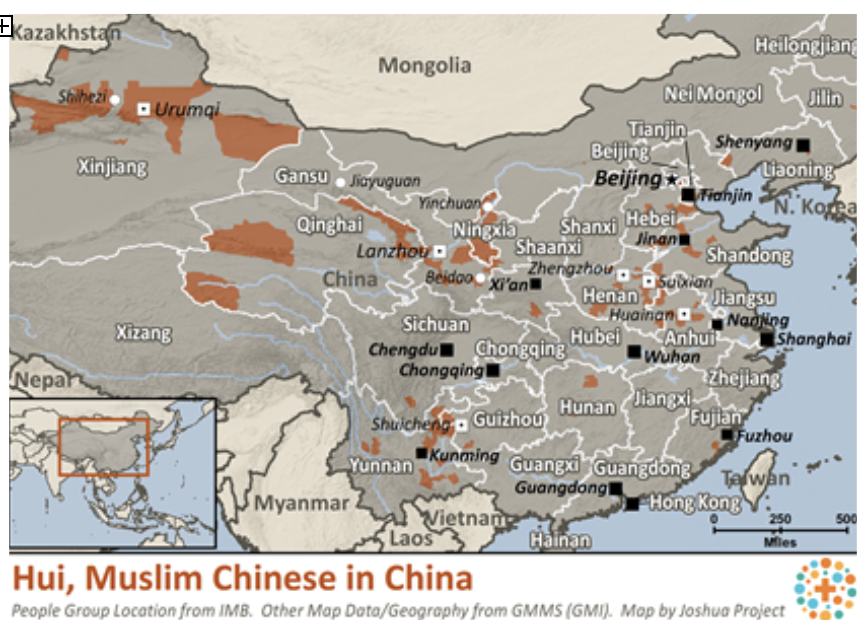
The ancestors of today’s Hui people group are a combination of Arab, Persian, Mongol and Chinese peoples. In the seventh century, Arab and Persian merchants traveled to China in search of riches. In the thirteenth century the mobile armies of the Mongols conquered parts of Central Asia and China. These ancestors of the Hui were expected to settle down at various locations to farm while being ready to fight.
The Hui spread throughout China, becoming artisans, scholars, officials, and religious leaders. They are the largest and most widespread of China’s Muslim peoples. Remarkably, they live in nearly all of China’s 2,369 counties and municipalities. They are known for their business acumen. The Hui speak standard Chinese with some words or phrases adopted from Arabic or Persian.
Thousands of mosques throughout China have been regularly attended by the Hui who are almost all Sunni Muslims. Although some of their practices are different from other Muslims, to be Muslim has been central to their identity for centuries. The Chinese Communist Party (CCP) has harshly persecuted Uyghurs Muslims for over a decade now. Until a few years ago, persecution for the Hui Muslims was less overt, but that is now changing. Human Rights Watch estimates that several thousand Hui mosques have been altered, repurposed or demolished since 2020 as the CCP implements a policy to “sinicize” all forms of religion into “appropriate” Chinese culture.
Prayers for the families of the Hui of China:
Lord, in this atmosphere of growing persecution, open doors for creative outreach in Hui communities, so they become part of God’s family and enjoy his blessings. Send believers to live among the Hui, sharing Jesus’ love with them so they become disciples who make disciples. Mobilize believing families within the vibrant underground church among their neighbors, the Han Chinese, to love and serve the Hui alongside Jesus.
Lord, send Your Spirit upon the Hui people, convicting them of sin, righteousness and judgment. Put a strong desire for Jesus within them, so they hear His voice and joyfully receive His Word.
Lord, cause many families to see that Jesus is for Muslims too, spreading the news from city to city. Bless the families of our Hui brothers and sisters and protect them from persecution.
God’s promise for the Hui in His Heavenly Kingdom: “The kingdom of heaven is like a mustard seed, which a man took and planted in his field. Though it is the smallest of all your seeds, yet when it grows, it is the largest of garden plants and becomes a tree, so that the birds of the air come and perch in its branches.” (Mt. 13:31-32)
Download audio Bible app as APK fileAndroid Bible app direct APK download (Simplified)Android Bible app direct APK downloadiOS Bible app: 普通话圣经iOS Bible app: Chinese, MandarinAndroid Bible app: 圣经当代译本修订版 - Chinese BibleAndroid Bible app: Chinese, MandarinAndroid Bible app: 普通话圣经Download audio Bible app from Google Play StoreAndroid Book Reading app: JM MandarineJesus Messiah comic bookThe Ancient PathThe Ancient Pathtools for gospel conversationsBible Gateway scriptureCartoon Gospel tractChildren and youth resourcesLiteracy primer for Chinese, MandarinBible: Comic Book VersionBible: Comic Book VersionTopical Scripture booklets and Bible studiesAudio Bible teachingOnline Audio ScriptureOral Bible storiesRock International: King of GloryWorld Christian VideosLove letter to you from scriptureIndigitube.tv Video / AnimationJesus film: view in Mandarin ChineseMagdalena videoMy Last Day video, animeStory of Jesus for ChildrenTetelestai: Creation to ChristLUMO film of GospelsThe Hope VideoGod's Story videoWalk with the Prophets and meet the MessiahBible for ChildrenBible Study Helper appFaith Comes By Hearing - Bible in text or audio or videoFaith Comes By Hearing - Bible in text or audio or videoFaith Comes By Hearing - Bible in text or audio or videoFaith Comes By Hearing - Bible in text or audio or videoFaith Comes By Hearing - Bible in text or audio or videoFaith Comes By Hearing - Bible in text or audio or videoFaith Comes By Hearing - Bible in text or audio or videoYouVersion Bible versions in text and/or audioBiblical answers to your questionsScripture Earth Gospel resources linksScripture Earth Gospel resources links (Simplified)Voice of the Martyrs resourcesZume ResourcesZume ResourcesZume Training
Prayers
Today: ⏳
Total: ⏳